
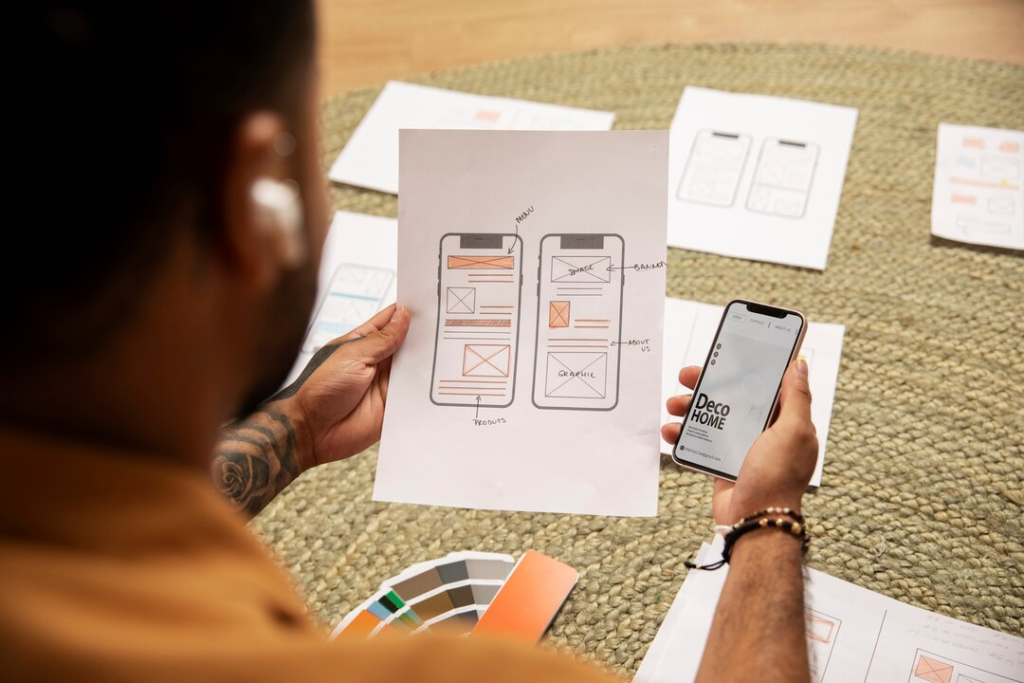
Creating a new product has gone beyond simply creating one that functions properly to creating one that creates a positive experience for the user. This includes all form factors, including mobile apps, websites and SaaS applications. The success of any of these products will be determined by how well the product meets the needs of the intended user. This is where user-focused product design and the benefits of UI/UX become crucial to the success of the product.
The product could have the best possible feature set; however, if users find that there are issues with learning how to use the product or using the product in the first place, they will no longer use it. Conversely, if the user experience has been designed well, the product could be simple, yet people would love it and use it on a daily basis. The change from functional product development to user-based product design differentiates successful products from those that fail.
Designing with the user’s needs in mind. This process includes everything from determining how users behave and what their expectations will be through collecting data via research, testing, feedback, or evaluating products, allowing for the team to create a product that truly meets the user’s needs/opinions.
The user-centred design process ensures that each aspect of a product, including the layout and functionality of the product, takes into account how the product is used by the end user. The user-centred design process solves problems in a way that is easy for users to use, rather than simply adding ‘functionality’.
At the end of the day, the user-centred design process is about designing a product that makes it easier to do something for the end user than making it easier for the product to be made or sold.
Although UI (user interface) and UX (user experience) are frequently mentioned together, the two are not interchangeable – they have quite different roles. UI design is responsible for a product’s look and feel (via visual design elements like colour, typography, buttons, layout, etc.), while UX is focused on a user’s total experience when using a product (e.g., usability, navigation, accessibility, etc.), including whether or not they have an easy time meeting their goals through using the product.
UI engages users by drawing their attention, whereas UX keeps them engaged. Users may be captivated by an aesthetically pleasing UI, but if they have an easy experience/a hassle-free experience while using that UI, they will want to keep using the product as well as keep coming back to use the product again.
Both UI and UX together form a completed user journey; i.e., they work together to deliver a fantastic experience.
In a marketplace with thousands of choices for end-users, a minor inconvenience can cause an end-user to look elsewhere for their product. Therefore, the design of the user experience and user interface is a major contributor to the success of a product.
A solid user experience will help the end-user experience minimal friction when interacting with the product while still allowing for the ease of quickly determining how to navigate through the product and complete the desired tasks. This ultimately leads to greater satisfaction and enhanced levels of engagement.
In addition, good UI and UX establish credibility/assertion amongst end-users. Users gain added confidence in their use of a given product if it looks like it was created by a professional and works as expected. This is especially true in the financial services, healthcare and e-commerce industries, where end-users’ ability to trust is extremely important.
Finally, good UI and UX drive measurable business results. Good UI and UX increase conversion rates, reduce bounce rates, and increase customer retention. In summary, great UI and UX equal great business performance.
Creating a successful user-centric product requires following certain core principles. One of the most important is simplicity. A clean and straightforward design helps users focus on what matters without feeling overwhelmed.
Consistency is another crucial element. When design patterns remain uniform across the product, users can navigate more easily without needing to relearn interactions. This improves usability and reduces errors.
Accessibility is equally important. A product should be usable by people with different abilities and preferences. This not only expands the user base but also ensures inclusivity.
Feedback is another key principle. Users should always know what is happening when they interact with a product. Whether it’s a loading indicator or a confirmation message, clear feedback enhances the experience and prevents confusion.
User-centric design is not a one-time activity. It is an ongoing process that involves continuous research and testing. Before designing a product, teams need to understand their target audience through user interviews, surveys, and behaviour analysis.
Once the design is created, usability testing helps identify potential issues. Real users interact with the product, and their feedback highlights areas that need improvement. This iterative process ensures that the final product aligns with user expectations.
Testing also reduces risks. Instead of launching a product with flaws, teams can fix issues early, saving time and resources in the long run.
The impact of UI/UX can be seen in everyday products we use. Apps that are easy to navigate and visually appealing tend to have higher user retention. On the other hand, products with poor design often struggle, even if they offer valuable features.
For example, a complicated checkout process in an e-commerce app can lead to abandoned carts. However, a simple and intuitive flow can significantly increase conversions. Similarly, a cluttered dashboard in a SaaS product can frustrate users, while a clean and organised interface enhances productivity.
These examples show that UI/UX is not just about design—it directly influences user behaviour and business success.
As technology continues to evolve, the importance of UI/UX will only grow. With the rise of AI, voice interfaces, and immersive experiences, user expectations are constantly increasing. Products need to adapt by offering more personalised and seamless experiences.
Design will become more data-driven, with insights guiding decisions at every stage. At the same time, empathy will remain at the core of user-centric design. Understanding human behaviour and emotions will continue to be the key to creating meaningful experiences.
Companies that invest in UI/UX today will be better positioned to succeed in the future.
User-centric product design is no longer optional—it is essential for building successful products. By focusing on user needs and leveraging the power of UI/UX, businesses can create experiences that not only attract users but also keep them engaged.
A well-designed product is not just functional; it is intuitive, enjoyable, and memorable. And in a competitive market, that makes all the difference.
If you want to build products that users truly love, it’s time to prioritise user-centric design and exceptional UI/UX.
Diama Technologies specialises in creating intuitive, scalable, and user-focused digital products that drive real business results. From research and design to development and optimisation, their expert team ensures every touchpoint delivers a seamless experience.
Partner with Diama Technologies today to transform your ideas into powerful, user-centric products that stand out in the market and deliver lasting impact.