
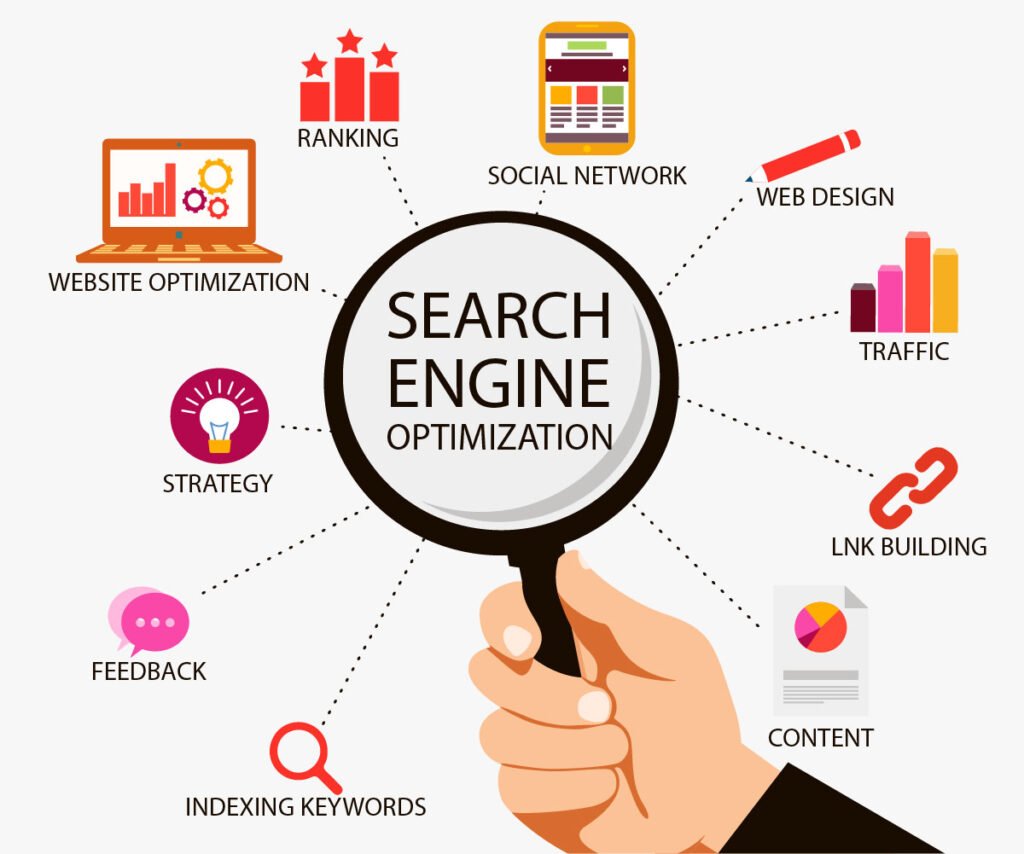
SEO (Search Engine Optimisation) has changed immensely over the last 10 years. In the past, ranking highly in search engines, like Google, was mostly reliant on having keywords in your content and building backlinks. Modern search engines now evaluate content for context, relevance, and the expertise of the topic’s creator. This is why establishing topical authority is one of the most effective strategies used by many SEO practitioners.
‘Topical authority’ means that you are able to demonstrate deep knowledge about every aspect of a designated subject area on your website. Rather than writing individual articles about different types of subject areas, successful websites create ‘content clusters’ around one central subject. By doing this, they are making it easy for search engines to determine that your site is an authoritative source of information about that subject.
In this article, we’ll take a look at what topical authority is and how content clusters work and provide recommendations for using this strategy to dominate the search engine results pages (SERP).
A dominating authority on a topic indicates that search engines view your site as an expert resource for that topic. When you have published a number of quality articles covering various aspects of the topic at hand, search engines can begin to assess your site’s credibility.
For instance, if a website has developed multiple excellent articles on various aspects of SEO, such as technical SEO, keyword research, link building, etc., search engines are more likely to see that website as an expert authority regarding SEO.
In addition to ranking benefits, this approach is becoming increasingly aligned with newer search algorithms, like Google Hummingbird and Google RankBrain, which focus on identifying the semantics of particular search queries rather than relying solely upon their keyword matchability.
As a consequence, websites that meet these criteria tend to achieve higher rankings and gain more organic traffic.
A content cluster is a structured content strategy where multiple related articles link back to a central “pillar page”. This structure helps both users and search engines navigate your content easily.
A typical cluster includes the following:
For example:
Pillar Page: Complete Guide to SEO
Cluster Articles:
Each of these articles links back to the main pillar page and to each other where relevant.
This structure improves site organisation and strengthens topical relevance.
There are numerous benefits to building topical authority for websites looking to improve their organic visibility.
Improves Rankings in Search Engines
Search engines reward websites that comprehensively cover topics over single articles, therefore favouring a site with multiple pieces of content regarding a similar theme.
Provides a Better User Experience
Users who visit a certain site often want to find additional information on related topics after reading an article. By linking articles together in groups as “content clusters”, users can easily navigate from one article to another without having to perform a search, which leads to increased user interaction and length of time spent on a webpage.
Increases Organic Traffic
Sites with many articles that target various long-tail keywords associated with a theme will experience an increase in organic traffic, as they will receive visits through multiple queries.
Builds Authority and Trust
Sites that consistently produce valuable, well-structured content will gain credibility among their users and search engines.
Creating topical authority requires a structured and strategic approach. Here are the key steps businesses should follow.
Start by identifying the main topics that align with your business services or expertise.
For example, a digital marketing company may focus on topics like the following:
Choose topics where your business can provide in-depth knowledge and consistent content.
Keyword research helps identify the subtopics and questions users search for within a broader topic.
Look for:
Tools like keyword research platforms can help you build a large list of potential cluster topics.
A pillar page acts as the foundation of your content cluster. It should provide an overview of the main topic while linking to detailed articles covering subtopics.
A good pillar page should:
Pillar pages often range between 2,000 and 4,000 words because they cover the subject broadly.
Cluster articles explore specific subtopics in greater detail.
For example, if your pillar page is about SEO, your cluster articles may include:
Each cluster article should target a specific keyword and link back to the pillar page.
Internal linking is one of the most important elements of the content cluster model.
Make sure to:
This structure helps search engines understand the relationship between pages and topics.
Search engines prefer updated and relevant content.
Regularly update your pillar pages and cluster articles with:
Updating older content also helps maintain strong rankings over time.
Even though content clusters are powerful, many websites make mistakes when implementing them.
Covering too many unrelated topics weakens topical authority.
Without proper internal links, search engines cannot easily understand content relationships.
Each article should provide real value and in-depth information.
Content must match what users are actually searching for.
Avoiding these mistakes will ensure your topical authority strategy delivers strong SEO results.
Semantic search (and algorithms driven by artificial intelligence) has changed the focus from strictly being keyword-based to searching content according to its context, relevance, and coverage of a particular topic. This presents an opportunity for those who build topical authority to have an advantage in the future.
By implementing structured content strategies to create pillar pages and cluster articles, companies will be able to establish themselves as leaders in search results and gain consistently high organic traffic over time.
Topical authority is the most important element of modern SEO. Structuring content into organised groups will show users that you are an expert, enhance the user experience, and help you rank higher in search engines.
Instead of writing and publishing standalone articles, companies should concentrate on developing a strong topic ecosystem where they answer every pertinent question from the perspective of a user.
This helps improve a company’s rankings in search engines as well as establish a brand as an authoritative source within its designated industry.
To produce strong SEO strategies that generate a continuous flow of organic visits to a website, you can work with the SEO experts at Diama Technologies. Their team specialises in advanced SEO strategies, topical authority frameworks, content marketing, and technical optimisation strategies to assist businesses in achieving a dominant position in search engine rankings.
If you are looking for more organic traffic to your website, improved rankings, or to become a long-term digital authority, Diama Technologies offers tailored SEO solutions that produce measurable results.
Start using Diama Technologies’ services today to create your brand’s topical authority in the search engine environment.