
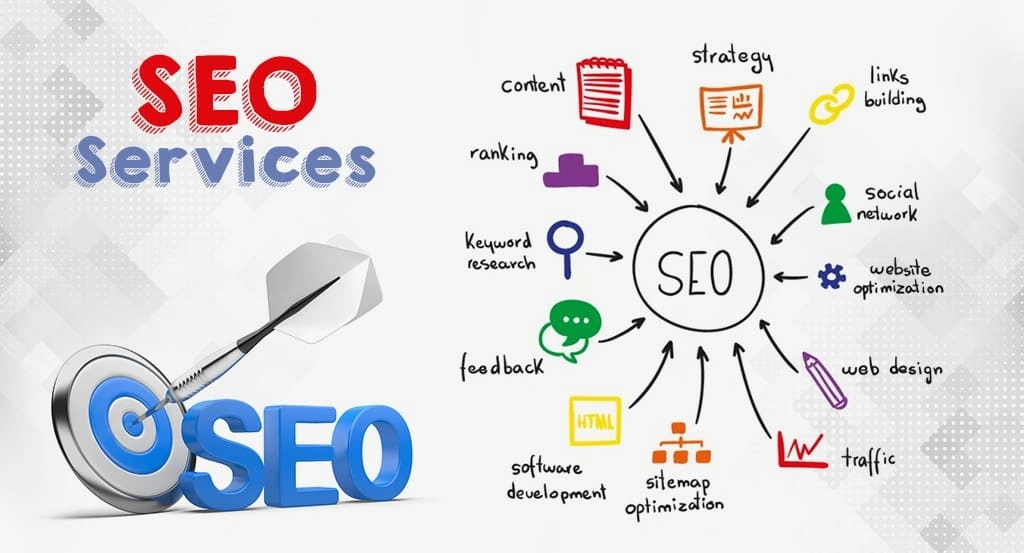
Search is at the beginning of every buying journey today. The first thought when someone wants a product/solution (whether it’s for software, advice, healthcare services, e-commerce, or other things) is usually to search online. Most will turn to Google for this search. There are billions of searches each day, and each one is a chance for your business. Are you visible to your potential future customers when they are searching?
Search Engine Optimisation (SEO) continues to rank as one of the most effective and cost-efficient (digital) marketing strategies and one that captures demand today (as opposed to paid advertising where you only have visibility until your budget runs out). SEO will create a long-term asset for your business. Once your business website is organically ranked, your business will receive high-intent traffic every month without having to pay per click. Over time, it provides compounding returns, provides your brand increased authority, and lowers your customer acquisition costs.
Any business that chooses NOT to incorporate SEO is generally reliant solely on paid campaigns. While paid advertising provides an opportunity for your business to generate traffic immediately, it typically does not create long-term trust and loyalty from users. However, being featured at the top of search results creates credibility for a business. Users have a bias to trust businesses appearing at the top of search results; therefore, they believe that these businesses are the most relevant in their industry and that they can trust them enough to make a purchase, which contributes to the continued growth of SEO as an effective marketing strategy.
SEO services are a group of techniques that have been developed over the course of time to increase the rank of your website in the organic search result listings. When you perform a search in Google, there are three things that happen behind the scenes.
The first is that search engines will crawl all of the websites to find the content they have. The second is that after they crawl through the websites, they will index all of the content that was found in a large database. The last thing that takes place is that search engines will rank the pages based on how relevant, high-quality, and authoritative they are and based on different user experience factors.
If your website is going to perform well through all three of those processes, then you should have professional SEO completed to optimise the technical structure of your website so that search engines can easily crawl your website.
You also should optimise and structure your website’s content based on user intent and also build up the authority of your website through high-quality backlinks and brand signals so search engines will view your website as an authoritative and trustworthy website.
Modern search engines have algorithms that evaluate hundreds of ranking factors when ranking your website. Some examples of these ranking factors include how fast the page loads, how responsive your page is to mobile devices, how in-depth the content is on your page, how engaged your visitors are with your page, how high your backlinks are to your page, and the overall user experience on your site. SEO in today’s world is not about tricking the search engine algorithms. It is about lining your website up with what users actually want and also what search engines consider to be high quality.
SEO is becoming harder to do than before. Most organisations are trying to manage their SEO in-house by writing blog posts and putting keywords in their content, which they hope will help them increase their rankings. SEO is now an extremely competitive and technical field. Without a comprehensive strategy, many times an organisation’s efforts will yield inconsistent or unsatisfactory results.
The level of competition in SEO is one of the biggest challenges. In almost all industries, companies are fighting for page one visibility. Well-established companies spend a lot of money building content, developing their technical infrastructure, and creating authority. These organisations must follow a structured and data-driven SEO strategy to effectively compete.
There are a number of updated algorithms by the major search engines that complicate the process. Search engines continue to enhance their algorithms to provide a better user experience by prioritising quality content. What worked for you two years ago may not work for you today. SEO success requires continuous professional monitoring and adjusting to ensure that you do not experience a sudden drop in rankings.
There are a number of complex technical aspects of SEO that will impact the success of any organisation. Technical issues related to site architecture, crawlability, page speed, Core Web Vitals, structured data, and mobile usability require specialised knowledge. If your organisation has even one small technical error, it can result in search engines being unable to properly index your pages.
Content saturation is another factor that makes it difficult for organisations to succeed with SEO. There are millions of new articles published on a daily basis. Just because you publish an article, it doesn’t mean that it will help you with your SEO. Articles must not only be well written, but they must also be properly structured, informative, and match the intent of a search.
An experienced SEO professional can provide your organisation with clarity, structured planning, technical accuracy, and long-term success.
At Diama Technologies, SEO execution follows a clear and structured framework designed to deliver measurable outcomes. Each stage builds upon the previous one to create sustainable growth.
Every successful SEO strategy begins with a detailed audit. This diagnostic phase identifies strengths, weaknesses, and opportunities within your website. We analyse crawl errors, indexing issues, broken links, duplicate content, technical architecture, and overall performance metrics.
Using tools such as Google Search Console and Google Analytics, we examine traffic patterns, search queries, click-through rates, and user behaviour. This data reveals which pages are performing well and which require improvement.
An SEO audit also includes competitor analysis. Understanding how competitors structure their content, build backlinks, and target keywords allows us to identify gaps and opportunities. Without a thorough audit, optimisation efforts become assumptions rather than informed decisions.
Keyword research forms the strategic foundation of SEO. However, modern keyword research goes far beyond identifying high-volume phrases. It focuses on understanding user intent.
Search queries can be informational, commercial, or transactional. Someone searching for “what is SaaS SEO” is in the awareness stage, while someone searching for “hire SaaS SEO agency” is close to making a purchase decision. Effective SEO maps content to these stages of the buyer journey.
We use professional research tools such as SEMrush and Ahrefs to analyse search volume, competition levels, keyword difficulty, and competitor rankings. This ensures that content strategy targets opportunities with strong conversion potential.
The goal is not simply traffic growth. It is qualified traffic that leads to meaningful business outcomes.
On-page SEO focuses on optimising individual pages to improve visibility and user engagement. This includes refining title tags, meta descriptions, header structures, and internal linking frameworks. Proper content formatting improves readability and search engine understanding simultaneously.
Content optimisation ensures that primary and secondary keywords are naturally integrated within a meaningful context. Structured content with clear headings enhances user experience and increases time on page. Internal linking strengthens site architecture and distributes authority across key pages.
Schema markup implementation further improves how search engines interpret content. When structured data is applied correctly, it increases the likelihood of rich results and enhanced visibility within search listings.
Technical SEO forms the backbone of search visibility. Without strong technical foundations, even high-quality content struggles to rank. We focus on improving website speed, optimising Core Web Vitals, enhancing玖玖ation, and ensuring mobile responsiveness.
Search engines prioritise user experience signals. Faster websites with intuitive navigation and mobile compatibility perform better in rankings. Secure HTTPS implementation, proper XML sitemap configuration, and optimised robots directives also ensure efficient crawling and indexing.
Technical SEO is not a one-time task. It requires continuous monitoring and adjustments to maintain optimal performance.
Content serves as the fuel for SEO growth. A structured content strategy includes pillar pages, topic clusters, blog articles, and optimised landing pages. Each piece of content is strategically designed to target specific keyword themes and search intents.
High-quality content follows E-E-A-T principles, emphasising experience, expertise, authoritativeness, and trustworthiness. This is particularly important in industries such as finance, healthcare, and SaaS, where credibility directly influences buying decisions.
Authority building extends beyond content creation. It involves acquiring high-quality backlinks from reputable sources. These backlinks act as endorsements, signalling trust to search engines. Digital PR, editorial placements, and brand mentions contribute to long-term domain authority growth.
Local businesses require specialised SEO approaches. Optimising a Google Business Profile ensures visibility in location-based searches and map results. Consistent citation management, review optimisation, and location-specific landing pages enhance local authority.
Ecommerce SEO presents different challenges. Product pages must be optimised for both search visibility and conversion performance. Structured product schema, category hierarchy improvements, and review integration strengthen rankings and user trust. Businesses operating on platforms such as Shopify and WooCommerce require platform-specific optimisation strategies to maximise results.
At Diama Technologies, we use a phased model for our SEO execution—discovering and aligning goals, clearly defining objectives, audiences & success metrics, and finally implementing our strategies.
Utilising an audit and research phase gives us insight based on data. We then develop a strategy based on those insights (i.e., translating the insights into actionable roadmaps). Our implementation phase consists of making any technical fixes needed, creating content, and developing authority. We monitor and report our SEO results to ensure full transparency and provide measurable tracking. Finally, we will continue to optimise our strategies based on performance trends and Google’s changing search algorithms.
This structured process provides clarity, accountability and sustainable growth.
Advanced tools allow us to make data-based decisions. We also use leading software such as Screaming Frog SEO Spider to analyse crawl data and technical performance in addition to utilising various analytic platforms.
By using data, we remove any guesswork from our recommendations. All recommendations are based on measurable insights versus assumptions.
Paid advertising platforms such as Google Ads provide immediate visibility—but require ongoing investment, meaning once a campaign stops, so does the traffic. SEO takes time and effort to build long-term value; however, organic rankings will continue to provide traffic well beyond the time it takes to execute optimisation efforts. Most businesses benefit from using both strategies together—using paid advertising for short-term results and SEO for long-term authority/credibility.
Effective SEO is measured through meaningful business metrics. Organic traffic growth indicates improved visibility. Keyword ranking improvements demonstrate progress in competitive positioning. Conversion rates reveal the quality of traffic being generated. Ultimately, revenue growth and reduced acquisition costs define true success.
SEO must connect directly to business objectives. Without revenue impact, rankings alone hold little value.
Search engine optimisation (SEO) is not something that is done overnight; it’s a long-term investment in digital authority and revenue generation. When you are able to place your website on the first page consistently for any search, you will have more visibility, credibility and trust in the eyes of consumers.
SEO, over time, provides you with a significant competitive edge. It lessens your reliance on paid advertising, increases your brand recognition and gives you compounding returns.
At Diama Technologies, we create SEO strategies focused on sustainable growth, measurable ROI and long-term partnerships.
If you’re ready to convert your search visibility into real business growth, now is the time to get started.
Contact Diama Technologies today to set up a strategy consultation, get your own custom SEO roadmap and start building your sustainable search dominance that will create revenue for years ahead.